


Public Humanities Fellowship: Trust in the Age of Generative AI

In early 2025, Center for the Humanities launched a nationwide open call, inviting writers, activists, scholars, teachers, storytellers, journalists, or community leaders working on issues related to data and generative AI to apply for a 2025-26 Public Humanities Fellowship.
Four fellows were selected to participate in a year-long project with two major components:
1) A series of facilitated discussions with guest experts in relevant fields. Discussions will broaden understandings of the challenges posed by generative AI from a variety of perspectives, including but not limited to technical expertise.
2) In collaboration with Oregon Humanities, each fellow will develop a public-facing project that will deepen political, ethical and/or social engagement with issues related to data and generative AI.
Fellows in this program will engage in collective inquiry alongside experts to create public-facing projects with Oregon Humanities that address issues related to data, generative AI and public trust.


Overview
With the advent of generative AI, deep-learning models have been introduced into almost every area data is collected and used: from classrooms to medical offices, government agencies, artist studios and beyond. The use of generative AI across a broad variety of social contexts raises a host of pressing cultural, social, political and ethical issues around trust and data. When is data being captured and used, to what ends, and to whose benefit or harm? These systems are often opaque, making it hard to parse the risks and benefits. Meanwhile, rhetorics of inevitability normalize adoption without reflection. How should we approach these new demands on our institutions, our values and our trust?
Within that context, four fellows will join the Center for the Humanities to explore issues related to trust, generative AI, and the public good. Over the course of academic year 2025-26, they will meet with experts in computer science, art, and community organizing to build the knowledge necessary to create public-facing projects. Oregon Humanities will work with each fellow to develop a public engagement opportunity from within their slate of programs that encourage discussion, questioning, reading and teaching.
Funding for this program was provided by a Mellon-sponsored grant from the Consortium of Humanities Centers and Institutes. The theme for this year's Public Humanities Fellowship was designed and supported by:
- Megan Ward, Director of Humanities Initiatives, Oregon State University
- Alicia Patterson, Mary Jones and Thomas Hart Horning Assistant Professor of Applied Philosophy, Oregon State University
- Adam Davis, Executive Director, Oregon Humanities
Selected Fellows
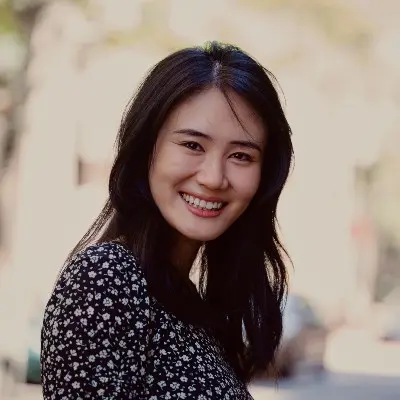
Yiran Hua
Yiran Hua will explore the effects of intimate relationships with AI companions to ask if these interactions offer a way to mitigate our current loneliness epidemic or if they might be making it harder to form real-world connections. If we trust an algorithm with our friendship, she asks, what happens to our trust in other humans? Hua is a philosopher and a postdoctoral research fellow at the Centre for Ethics at the University of Toronto.
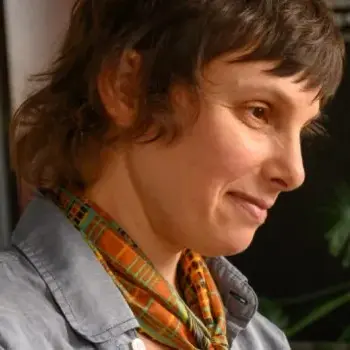
Kate Kaye
Kate Kaye will study and interrogate the concept of "trust scores," our impulses to quantify trust and trustworthiness, and the measure of confidence in a person or an organization. She will study the historical roots of trust scores, the process of their creation, and philosophical questions surrounding them: Who determines trust and to what ends? Kaye is a researcher and journalist focused on data and algorithmic systems.
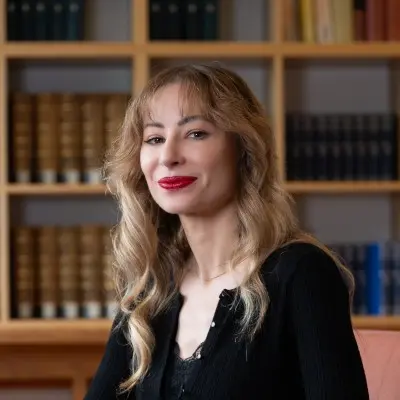
Shawna Lipton
Shawna Lipton aims to equip artists, educators, and cultural workers to critically engage with generative AI, data ethics and technological literacy. The project will include an art exhibition featuring AI-protected, corrupted images — visual works designed to resist exploitation by AI training models. Lipton is Associate Dean of Faculty Development and Chair of the MA in Critical Studies program at Pacific Northwest College of Art at Willamette University.

Danlu Yang
Danlu Yang’s project will include multi-lingual community dialogues that examine how generative AI and data technologies impact trust, language, and agency, particularly among immigrant, bilingual, and marginalized communities in Oregon. She is a Ph.D. student in Applied Anthropology at Oregon State University.
Residency Details
This fellowship opportunity was open to scholars, researchers, writers, and community or nonprofit leaders whose work is grounded in the humanities. That is, we welcomed applications from those who employ interpretive, discursive, and creative methods to approach questions and issues involving the human experience and human impacts. This includes those working in traditional humanities disciplines (philosophy, ethics, history, literature, religious studies, writing, etc.) and beyond.
Those with interest or experience in collaborative interdisciplinary work and the public humanities were encouraged to apply, as well as applicants from historically under-represented groups. Applicants working on projects relevant to the Pacific Northwest were also encouraged to apply.
- A one-year commitment: May 2025 to July 2026, with projects submitted and completed by July 2026. No commitment over summer 2025.
- Create intellectual community and continuity by:
- Attending a virtual orientation meeting in May 2025.
- Attending an in-person gathering in September 2025 in Oregon.
- Participating in virtual meetings once a month from October 2025 through May 2026. Fellows will have the opportunity to design questions and discussion topics for relevant expert guest speakers.
- Complete a public humanities project in partnership with Oregon Humanities that engages questions about trust, data and generative AI. Projects might take the form of an essay, a podcast episode, a moderated on-stage conversation, a set of lesson plans or guest lecture, and/or a workshop or community event. All projects should be developed for a public audience of non-specialists.
- Participate in mid-project progress meetings and provide programmatic feedback at the end of the year.
Each fellow will receive:
- A $4,000 stipend
- Support for travel expenses.
- The opportunity to engage in deep listening, creative reflection and idea-building within an interdisciplinary thinking community.
- Support coordinating and promoting a public humanities project with an established audience.
- April 25, 2025: Application deadline.
- May 11, 2025: Applicants notified of status.
- May 2025: Complete paperwork and attend an online orientation.
- September 2025: Fellowship begins with an in-person gathering in Corvallis, Oregon.
- October 2025: Once-per-month virtual meetings begin.
- July 2026: Projects completed.
Public Humanities Fellowships are supported by Oregon Humanities, the Consortium of Humanities Centers and Institutes and an alliance of organizations at Oregon State University: Center for the Humanities, the Thomas Hart and Mary Jones Horning Endowment, and the Patricia Valian Reser Center for the Creative Arts (PRAx).